

There was a time when cartoons were primarily meant to distract kids while their parents relaxed on Saturday mornings. We’re long past that now. Not only does animation cater to a plethora of different audiences, it’s also one of the most enduring and lucrative genres on television.
There were too many great contenders to include them all, so here is our very narrowed-down list of the 15 best animated TV shows of all time.
Avatar: The Last Airbender
For a show that’s only three seasons long, this action-packed, anime-influenced saga has had an outsized influence on pop culture. Almost two decades before Netflix adapted “Avatar: The Last Airbender,” Nickelodeon viewers in 2005 were scarcely prepared for the original series that unfolds across an Asian-inspired fantasy world and touches on war, racism, trauma, and parental abuse. At the center of the story, there’s Aang — a divine child with the power to manipulate air and the capability to eventually do the same with water, earth, and fire.
Virtually every prominent character gets an arc, even baddies like the exiled Fire Nation Prince Zuko. When the series wrapped in 2008, fans craved more; but instead of more Aang, the minds behind the franchise gave them something different: They skipped ahead 70 years on the timeline for “The Legend of Korra,” which premiered on Nickelodeon in 2012 and takes place in a more multicultural and industrialized setting.
He-Man and the Masters of the Universe
Believe it or not, the “He-Man and the Masters of the Universe” franchise did not begin its existence as an animated series. Originally, it was a toy company’s attempt to capitalize on the exploding popularity of “Star Wars” action figures.
In the wake of Kenner’s massive success with the “Star Wars” brand and after runs of “Flash Gordon” and “Battlestar Galactica” toys didn’t sell, Mattel conjured up its own original world of “He-Man” — a blend of fantasy, sci-fi, and physiques that made Arnold Schwarzenegger look puny – to dominate the action figure market. But after it made the toys, how would Mattel sell “He-Man” to kids who hadn’t seen the characters before?
While previous iterations of the FCC frowned upon children’s programs that were thinly veiled commercials, the Reagan administration’s version of the agency had no such squabbles, and “He-Man and the Masters of the Universe” debuted on syndication in 1983. For obvious reasons, the show is campier and much kid-friendlier than its grittier fantasy inspirations like “Conan the Barbarian.”
“He-Man” set a precedent quickly followed by the likes of “Transformers” and “ThunderCats,” both of which told stories that added dimension and heart to plastic warriors adored by a generation. “He-Man” also provided an early career boost to writers J. Michael Straczynski and Paul Dini.
Duckman
You can’t talk about animation in the ’90s without mentioning the production studio Klasky Csupo, whose projects ranged from “The Simpsons” to “Rugrats” to several others that aren’t as widely recognized … like “Duckman.”
Premiering in 1994, the USA Network’s raunchy not-for-kids ‘toon cast Jason Alexander as the title character — a misanthropic widower and private detective with a family that hates him. He works with his much smarter sidekick Cornfed (a pig) and cute office assistant teddy bears Fluffy and Uranus whom he routinely mutilates. Over the course of four seasons, the show sends up sitcoms, film noir, televangelists, and Vietnam War movies.
Duckman isn’t really a nice guy — in fact, some of the gags on this show aged about as badly as anything else from mid-’90s cable — but his struggles against hypocrisy and social dysfunction make him more like an anti-hero than a truly malevolent mallard.
Rick and Morty
Animation can do anything and go anywhere. No sci-fi show has taken advantage of infinite possibilities quite like “Rick and Morty” has with storylines that interrogate deep psychological, existential, and metaphysical issues, all while making room for edgelord humor and merchandisable anthropomorphic pickles.
“Rick and Morty” began life as “Doc and Mharti,” an obscene cartoon parody of “Back to the Future.” After the first handful of episodes aired in 2013, the show evolved into something more like a riff on “Doctor Who” in which The Doctor is an irresponsible drunkard. Though “Rick and Morty” has had its issues with toxic fans and an allegedly toxic co-creator, the show has been the cornerstone of Adult Swim for more than a decade.
SpongeBob SquarePants
“SpongeBob SquarePants” premiered in 1999 and remains one of Nickelodeon’s most prominent properties. Parents love the somewhat accurate jokes about marine biology; teens and young adults love the psychedelic weirdness; and kids identify with the childlike SpongeBob who flips burgers for a living while remaining the happiest, friendliest guy in town.
If SpongeBob’s too nice to relate to — or you simply don’t care for his dolphin-like laugh — there’s always money-obsessed Mr. Krabs, curmudgeonly Squidward, lazy Patrick, or ingenious Sandy Cheeks. That slack-key guitar soundtrack sets a timeless tone, and the sheer variety of sea-creatures keeps the underwater setting looking unique. “SpongeBob” has spawned multiple spin-off series and movies, most of which change up the animation style and feature big-name celebrities.
Aeon Flux
Spawned from a series of shorts that originally ran on the anthology show “Liquid Television” in 1991, prolific animator Peter Chung’s brainchild follows lovers and ultimate frenemies Aeon and Trevor.
In a future that may or may not take place on Earth, Trevor is the fascist dictator of Bregna while Aeon is a saboteur from the neighboring Monica. In a strange and sensual environment filled with mutants and body modification, the two post-apocalyptic nations struggle for the upper hand while their champions go back and forth between making out and trying to kill each other.
The continuity is loose — Aeon dies more than once. Greenlighting this violent, surreal, possibly sexy series was a bold move, even for MTV back when it was still in its countercultural era.
Batman: The Animated Series
Paul Dini and Bruce Timm’s “Batman: The Animated Series” raised the bar for superhero cartoons with a throwback design approach inspired by Max Fleischer’s 1940s “Superman” shorts and the neo-noir style of Tim Burton’s live-action movies. Kevin Conroy and Mark Hamill voiced versions of Batman and the Joker that many fans still consider definitive. The show also included the debut of Joker’s sidekick Harley Quinn, which predates her first comics appearance.
New episodes aired from 1992 to 1995 on Fox Kids and the direct sequel series “The New Batman Adventures” ran from 1997 to 1999 on The WB. While the networks demanded audience-appropriate limits on violence and vice, “Batman: TAS” got about as grimdark as the creators could get away with at the time. Compared to the candy-coated, hyper-toyetic Joel Schumacher “Batman” movies of the second half of the decade, “Batman: TAS” might as well have been “The Wire.”
Beavis and Butt-Head
Created by Mike Judge, Beavis and Butt-Head have come a long way. When the maladjusted teens emerged on MTV in 1992, audiences saw them do some actively nasty, unfunny stuff. Some people accused Beavis’ pyro-related antics of inspiring real-life mayhem and tragedy.
The original run of “Beavis and Butt-Head” ended in 1997 after seven seasons on MTV, and as of this writing, the latest revival has aired two seasons on Paramount+ and one on Comedy Central. How could characters that started out surrounded by controversy and depravity have this level of staying power? It’s possible that the metalheads’ honest, unpretentious commentaries on music videos and other media continue to strike a cultural nerve. However, certain critics would suggest that when the show’s eponymous duo stumble into a crisis that could be easily resolved by any normal intellect, they can achieve comedy sublimity.
Classic examples include 1994’s “The Pipe of Doom,” in which Butt-Head gets stuck in a pipe; “Tired” from 1995, in which Butt-Head pushes a tire that rolls down a hill with an unexpecting Beavis, screaming in horror throughout the ordeal, trapped inside; or 2022’s “Boxed In,” in which Beavis and Butt-Head get stuck in a cardboard box.
Space Ghost Coast to Coast
Non-sequitur humor, surrealism, casual cruelty for laughs, and reinterpretation of poorly reviewed retro media – these are defining motifs for a wave of ‘toons on Adult Swim including “Harvey Birdman: Attorney at Law,” “Aqua Teen Hunger Force,” and “Sealab 2021.” But the leader of the pack was “Space Ghost Coast to Coast,” which began broadcasting from the Ghost Planet in 1994.
The original “Space Ghost” was a cheesy 1960s sci-fi superhero show by Hanna-Barbera. “Coast to Coast” reused old cels and recontextualized the derivative hero as a talk show host who enslaved two of his arch-villains — Zorak and Moltar — to work as his director and bandleader, respectively. Interviews with actual celebrities were edited into nonsensical, side-splitting exchanges.
Perhaps “Space Ghost Coast to Coast” was meant to appeal to Gen-X’s love of ironic detachment and throwback pop culture, but it became a sincerely beloved franchise in its own right.
The Magic Roundabout
“Le Manège enchanté” was a 1964 French stop-motion series aimed at preschoolers; in England, however, as “The Magic Roundabout,” it was redubbed with scripts that bore limited resemblance to the originals and featured low-key jokes about politics and the counterculture. Narrator Eric Thompson (father of Emma) performed almost all the voices himself, which led to some of the characters having strong regional accents to distinguish themselves. These included nervous, curious dog Dougal, magic jack-in-the-box Zebedee, hippie musician rabbit Dylan, and pragmatic human girl Florence.
The show’s original seven-year run on the BBC extended into a canonical movie “Dougal and the Blue Cat” in 1970, which was also redubbed from the French. In 2005, a movie came out featuring an all-star cast including Ian McKellen, Robbie Williams, Kylie Minogue, and Tom Baker. In a bit of irony, a new version of the “Magic Roundabout” film mostly redubbed with American actors and retitled “Doogal” was released in the U.S. a year later.
Robotech
While more simplistic programs like “Speed Racer” made it over from Japan to the U.S. earlier, “Robotech” — a serialized show about three different alien invasions of Earth in the future — was one of the earlier anime series on American TV that kept a lengthy, complex storyline intact … sort of.
What aired in the U.S. in syndication as “Robotech” was actually stitched together from three unrelated shows — “Super Dimension Fortress Macross,” “Super Dimension Cavalry Southern Cross,” and “Genesis Climber Mospeada.” This patchwork, multi-generational narrative required kids to pay attention to an extent they didn’t need to for cartoons that were mostly self-contained stories.
Since the ’80s, plenty of anime programs have surpassed this series in state-side notoriety and acclaim – “Neon Genesis Evangelion,” “Cowboy Bebop,” the “Dragonball” franchise, the list goes on — but “Robotech” paved the way. One of the jet fighter robots of “Macross” was even briefly repurposed as the Transformer Jetfire.
The Gumby Show
Created by Art Clokey, Gumby debuted on “Howdy Doody” in 1955 and proved popular enough to get his own series the following year. “The Gumby Show” on NBC pioneered the medium that eventually came to be known as Claymation by demonstrating how malleable the material — and the storytelling — could be. Gumby’s arch-nemeses, the Blockheads, have literal cube-shaped building blocks for heads.
Green in color and bendy in style, Gumby had an orange horse named Pokey, and they went on adventures that could involve outer space, mermaids, and dinosaurs. “The Gumby Show” originally lasted until the ’60s, but interest revived during the ’80s when Eddie Murphy spoofed the character on “Saturday Night Live.” Since then, Gumby has hung around in some form or another, finally getting his own movie in 1995.
The Flintstones
First broadcast in 1960 on ABC, “The Flintstones” became the first prime-time animated sitcom, setting the tone and formula for many since. Essentially adapting the premise of “The Honeymooners” and setting it in the Stone Age — Jackie Gleason once said he could have sued but didn’t feel like it — “The Flintstones” established the template for “The Jetsons, “The Simpsons,” and “Family Guy,” among many others. That “The Flintstones” remains part of our culture — even if it’s more significant in the breakfast cereal and vitamin aisles than on our TV — attests to its staying power, as does the fact that everyone knows that earworm theme song and the “Yabba dabba doo!” catchphrase.
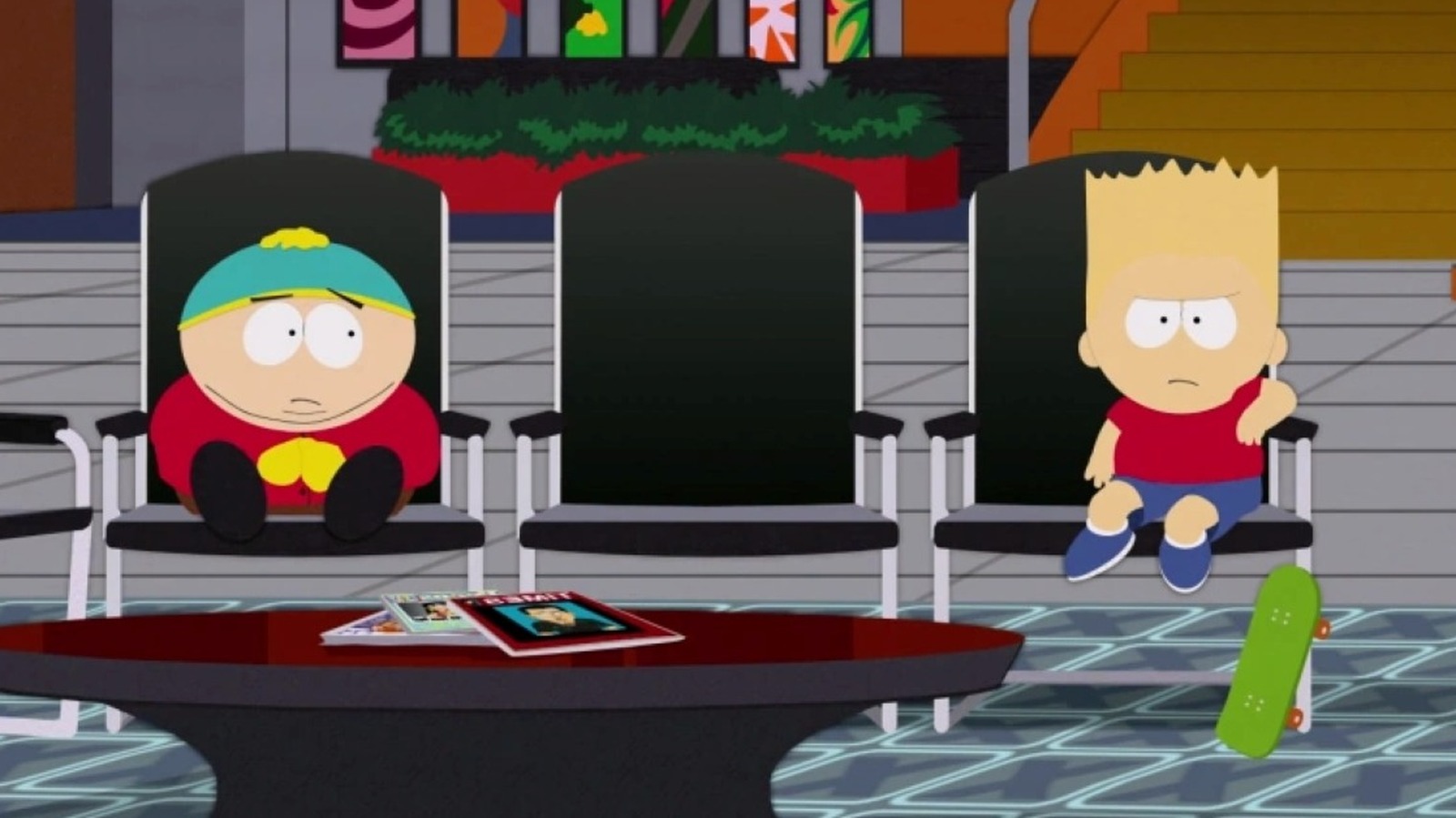
South Park
Beginning life as a cardboard cut-out parody of children’s Christmas specials, “South Park” has become a barometer of contemporary satire. Through the perspective of elementary school kids — niceish-guys Stan and Kyle, selfish and racist Cartman, and doomed Kenny — the show took on small-town stupidity and larger issues with equally bared fangs right from the jump.
It’s been fascinating to watch perceptions of “South Park” change over the years. At first, some dismissed its appeal as merely the shock value of kids swearing. Later, its political commentary and celebrity parodies caught on. After 9/11, conservatives tried to claim it as their own, while other pundits praised it for skewering both sides of American politics. Later still, some critics argued that by mocking passionate advocates of every issue, “South Park” was signaling to its audience that it’s uncool to care.
“South Park” premiered on Comedy Central in 1997, has produced more than 300 episodes since then, and remains politically and culturally relevant. There’s nothing else on TV like it.
The Simpsons
For over 30 years, “The Simpsons” has been a fixture of primetime on Fox. It’s such a part of the fabric of the culture now that many of us know instantly what a person means if they call someone a “Mr. Burns” or describe a new character on a show as a “Poochie.” It’s almost hard to believe that Bart Simpson T-shirts were once banned in public schools, or that President George H.W. Bush criticized “The Simpsons” for insufficient family values. And sadly, the notion that a low-level power plant employee could own a home and support a family of five on one paycheck has aged terribly.
Matt Groening was once known mainly as the creator of the underground comic “Life in Hell.” “The Simpsons” gave him even more space to satirize pop culture and society in a way nobody else did then, but plenty of folks do now.